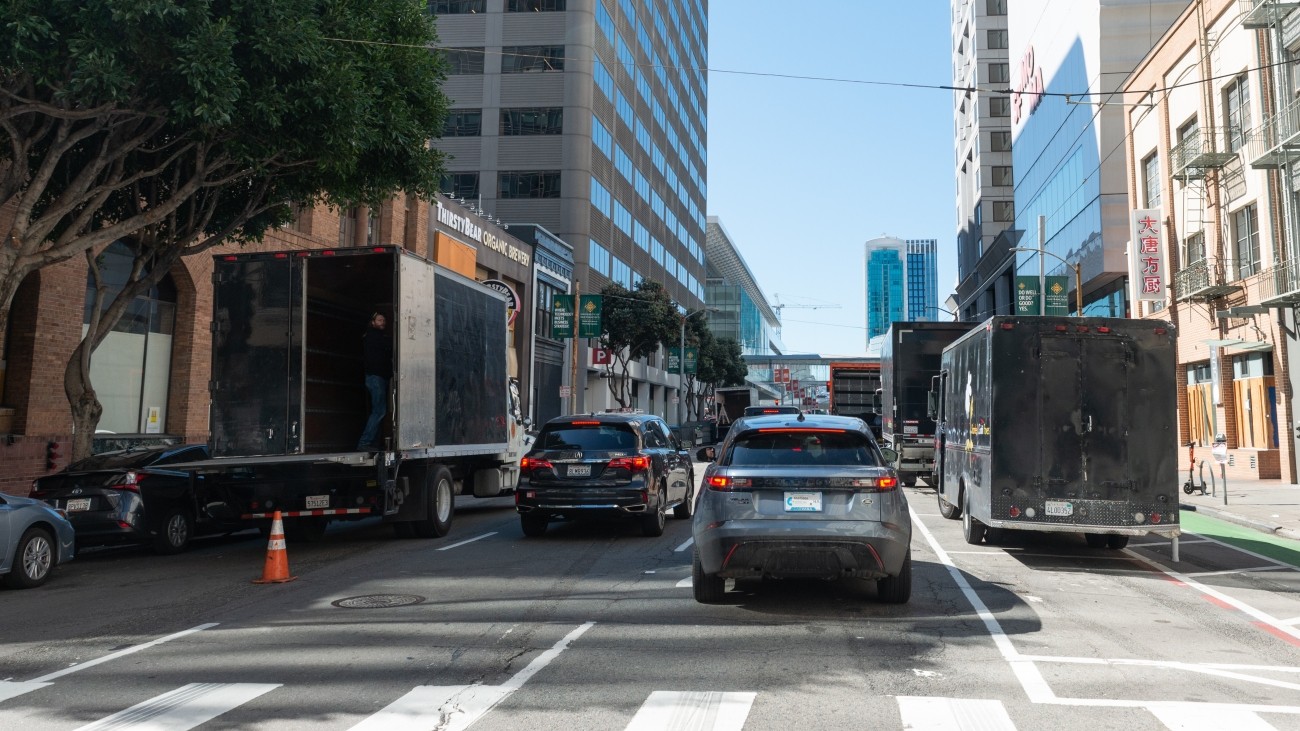
Photo by SFMTA Photography Department
During the November 4 Transportation Authority Board meeting, board members approved the final Eco-Friendly Downtown Delivery Study Final Report (PDF).
The Transportation Authority led the Eco-Friendly Downtown Delivery Study to bring together a working group of local merchant associations, community benefit districts, delivery companies, and environmental groups from commercial corridors to explore the potential for San Francisco’s growing goods delivery sector to utilize low and zero-emission modes of transportation.
The transportation sector is estimated to account for nearly half (46%) of San Francisco’s greenhouse gas emissions, according to data in the 2021 San Francisco Climate Action Plan and San Francisco Transportation Plan 2050.
The study team and working group developed a shared goals framework from existing research that was applied to a set of pilot ideas to understand which sustainable goods movement strategies might work well in San Francisco over the long term.
The study found that two pilot opportunities have the potential to be effective in reducing emissions in the goods delivery sector:
- Off-Hours Delivery Program - This program seeks to shift delivery to off-peak hours when traffic is less heavy and there is less demand for curb space. This program has shown clear benefits in peer cities, including New York, where deliveries have a significant impact on congestion and traffic circulation.
- Logistics Microhub System - Logistics microhubs are locations where goods are transloaded from larger freight vehicles to smaller electric or human powered vehicles (e.g., cargo cycles, hand carts, or golf carts) for final delivery. Microhubs can also incorporate charging infrastructure and vehicle sharing programs to support delivery modes such as e-bikes or e-cargo bikes.
Additionally, the study found that goods movement in San Francisco happens at many different scales and is extremely varied, making planning fragmented across multiple agencies. Overall, data sources are also limited and fragmented.
The study recommended additional data collection and engagement with merchants and/or freight teams to better understand the goods delivery sector, development of off-hours delivery and logistics microhub pilots, and pursuing funding sources for these activities. The study further recommended creation of a city goods delivery sector staff working group to facilitate collaboration among key agencies such as the San Francisco Municipal Transportation Agency, San Francisco Department of the Environment and Transportation Authority.
The study was funded by the Transportation Authority’s half-cent transportation sales tax fund and the Carbon Neutral Cities Alliance grant.