Photo by SFMTA Photography Department
The Transportation Authority has released the latest data on congestion in San Francisco, offering a comprehensive look at how the city's transportation system is evolving in the post-pandemic era. As San Francisco’s Congestion Management Agency, we monitor the performance of our transportation network on San Francisco streets and issue a report on the latest data every two years.
The Congestion Management Program report was presented to the Transportation Authority Board at the December 9 meeting and given final approval at the December 16 meeting.
The Congestion Management Program, or CMP, monitors and reports on San Francisco’s transportation system performance, describes the Transportation Authority’s work program related to advancing the goals and strategies of the San Francisco Transportation Plan, and demonstrates conformity with state congestion management law.
Review the full Congestion Management Program report (PDF) and presentation to the Transportation Authority Board (PDF).
Key Findings
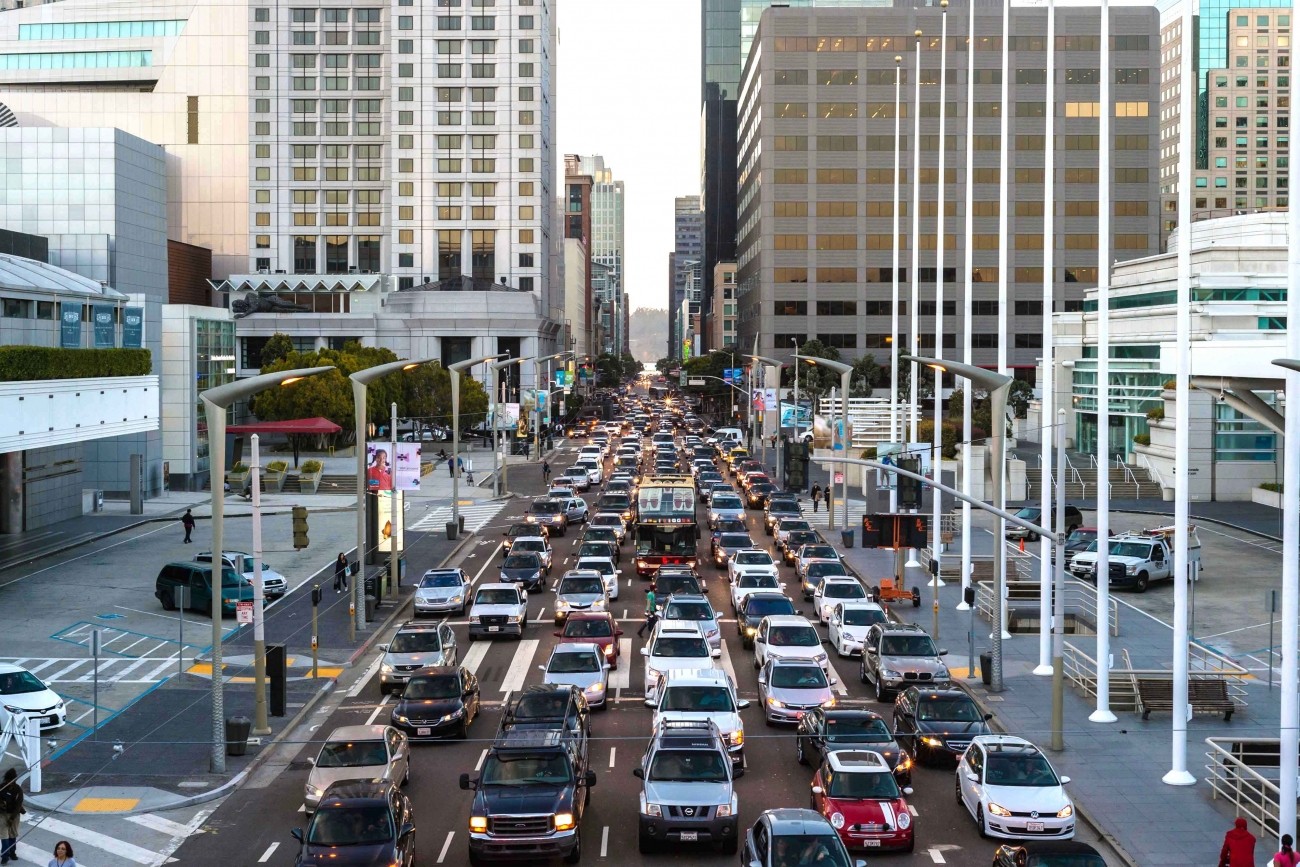
Roadway Speeds: In general, roadway speeds are lower during the PM peak than in the AM peak, conforming to long-time historical trends. Average speeds on the CMP network arterials have decreased since 2024 for both the AM (-4%) and PM (-6%) peaks. Average speeds on CMP network freeways also decreased in both the AM and PM peak (-4%).
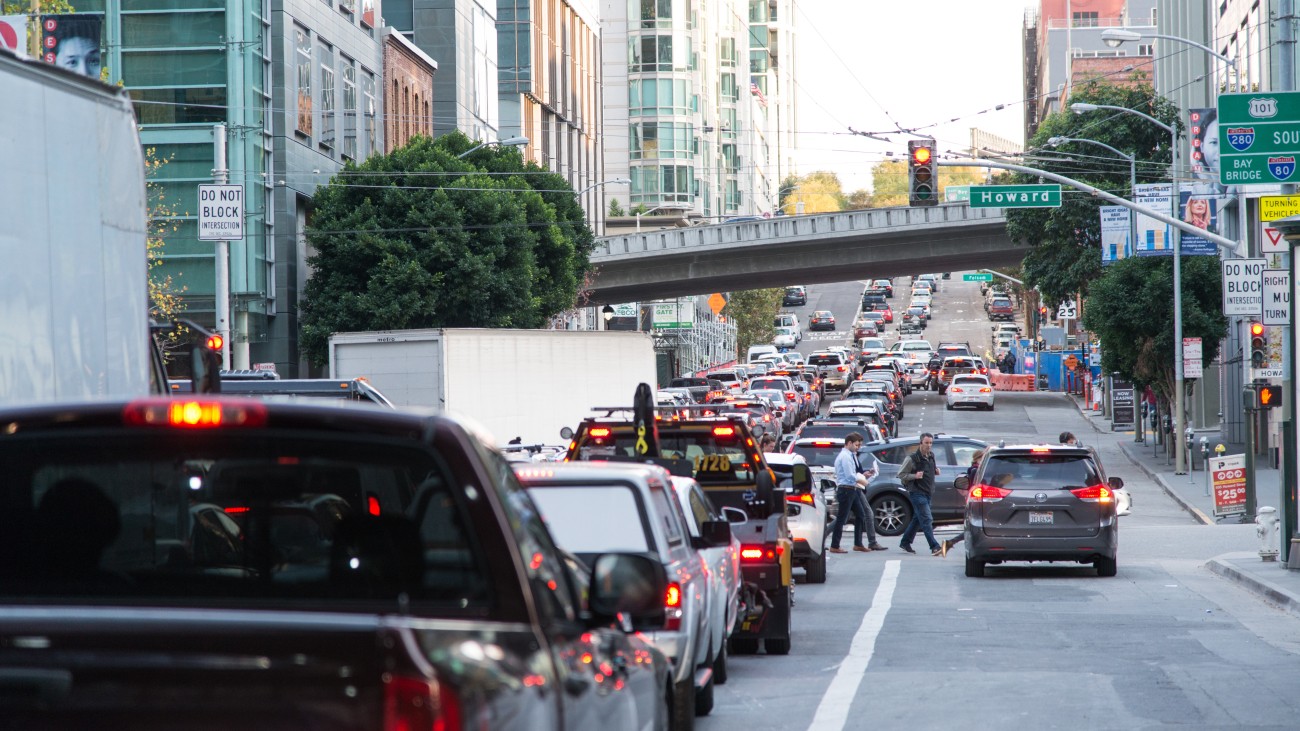
Roadway Travel Time Reliability: Roadway travel time reliability became better on arterials, but reliability on freeways at peak hours worsened significantly, which may reflect overall increasing peak period congestion near pre-Covid levels, while also having more day-of-week variation in peak period congestion typical of the post-Covid era.
Transit Speeds and Travel Time Reliability (Muni bus): Transit speeds and transit travel time reliability stayed constant between 2023 and 2025.
Muni Coverage: Muni continues to serve more than 95% of San Francisco residents within a 5-minute walk of their residence. The share of the population within a 5-minute walk of a Muni route with a 5-minute headway increased from 27% in 2023 to 29% in 2025 for the AM peak and from 20% in 2023 to 27% in 2025 for the PM peak.
Transit Ridership: As of October 2025 (for Muni and Caltrain) and June 2025 (for BART), ridership has further recovered to 82%, 48%, and 62% of pre-pandemic ridership for Muni, BART, and Caltrain, respectively.
Micromobility Trips: Average monthly shared bike and scooter trips have increased 110% from 2023 to 2025 in data available through September 2025.
Traffic Collisions: The number of property-damage only collisions, non-severe injury collisions, and severe injury collisions in San Francisco has remained mostly stable since 2020. However, the number of fatal traffic collisions has been trending up since 2017, reaching 42 in 2024 (of which 23 and 3 involved pedestrians and bikes, respectively).
The Path Forward
As San Francisco continues its post-pandemic recovery, the Congestion Management Program will serve as a critical tool for monitoring progress and informing transportation investments toward a more efficient, equitable, and sustainable future.
The Transportation Authority is analyzing current conditions and conducting long-range planning to manage congestion through the update of the San Francisco Transportation Plan, and will continue planning, funding, project delivery, and policy research efforts. The Transportation Authority is also coordinating with numerous local, regional, state, and federal agencies, and with the private sector to address congestion.
Major projects underway include Muni vehicle replacements, the Portal/Caltrain Downtown Extension, Peninsula Corridor electrification, and numerous Vision Zero safety improvements targeting the High Injury Network, where the majority of severe and fatal crashes occur.
In July 2025, the San Francisco Board of Supervisors passed the San Francisco Street Safety Act, authored by District 7 Supervisor and Transportation Authority Board Chair Myrna Melgar. This act reaffirms the city’s commitment and describes a shared work program toward eliminating traffic fatalities and creating a culture that prioritizes traffic safety. The Transportation Authority and the Controller’s Office were charged with monitoring these actions and assessing progress on an annual basis.
Resources
Related Content