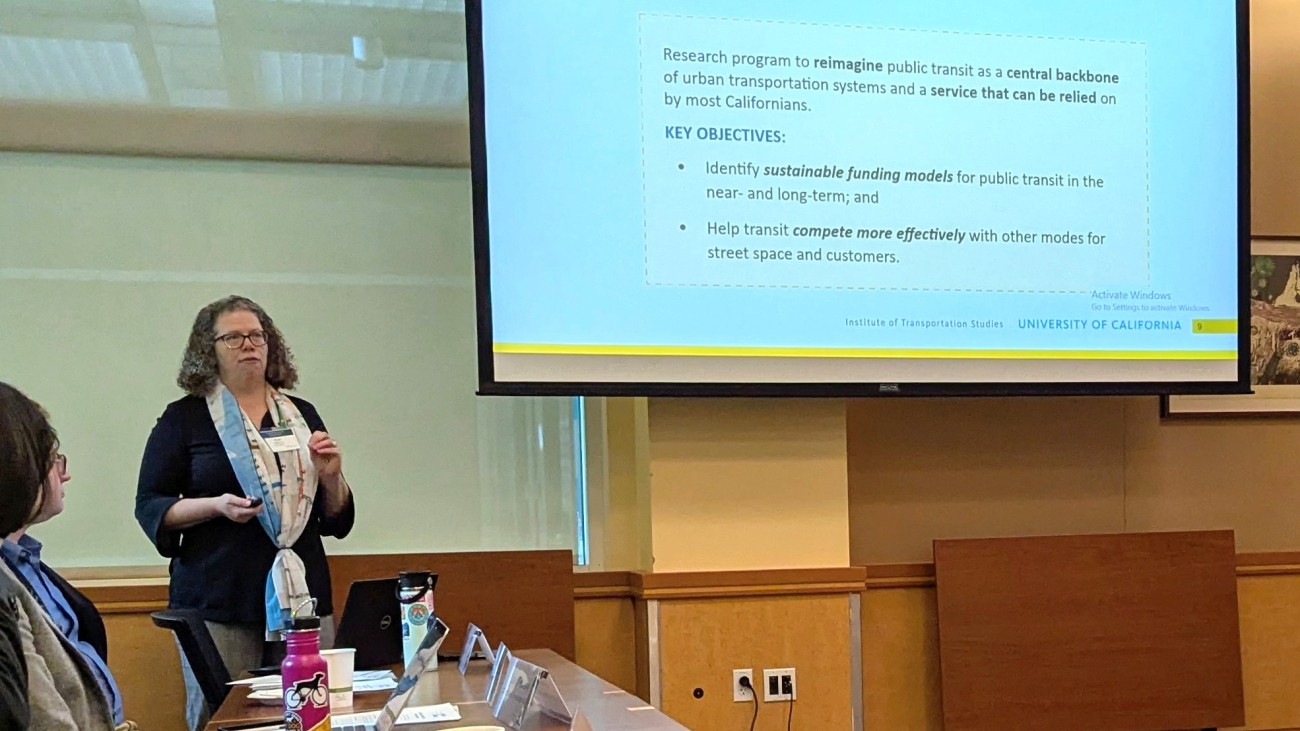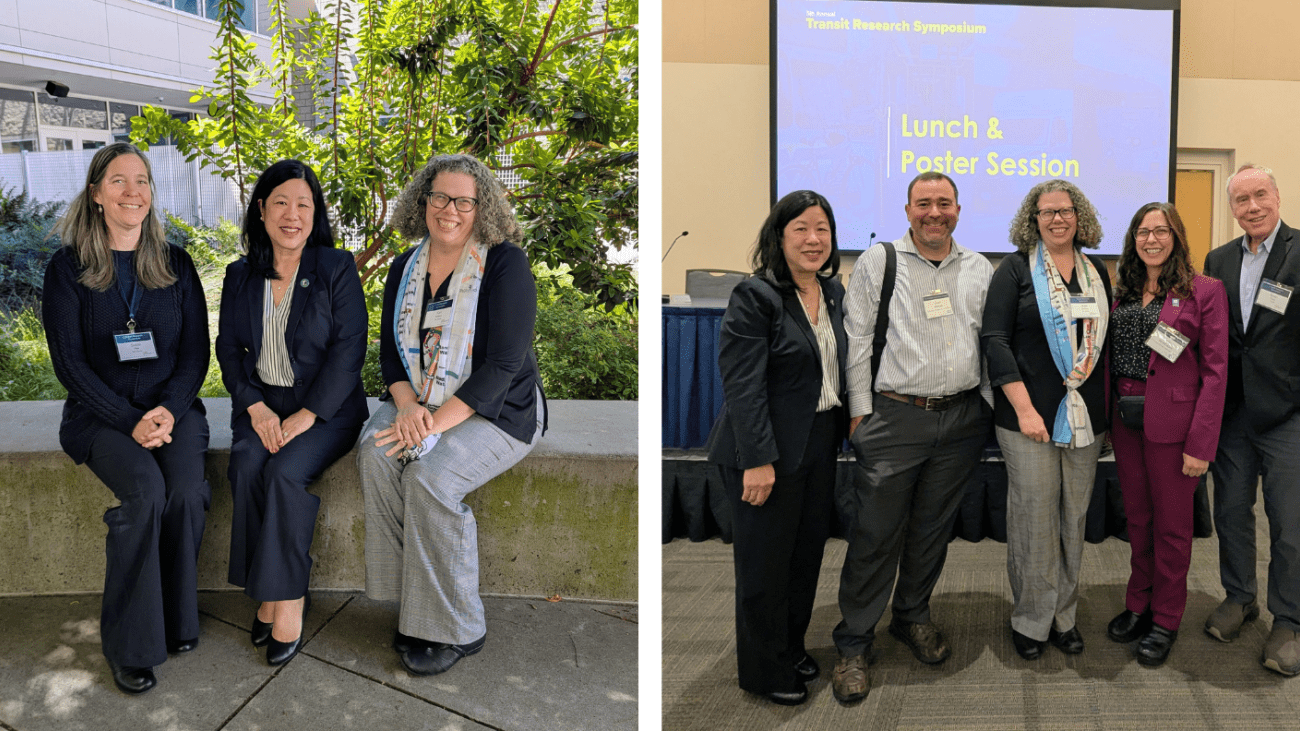
Left Image: Transportation Authority Executive Director Tilly Chang (middle) with UC Davis Transit Center Co-Directors Susan Pike (left) and Kari Watkins (right)
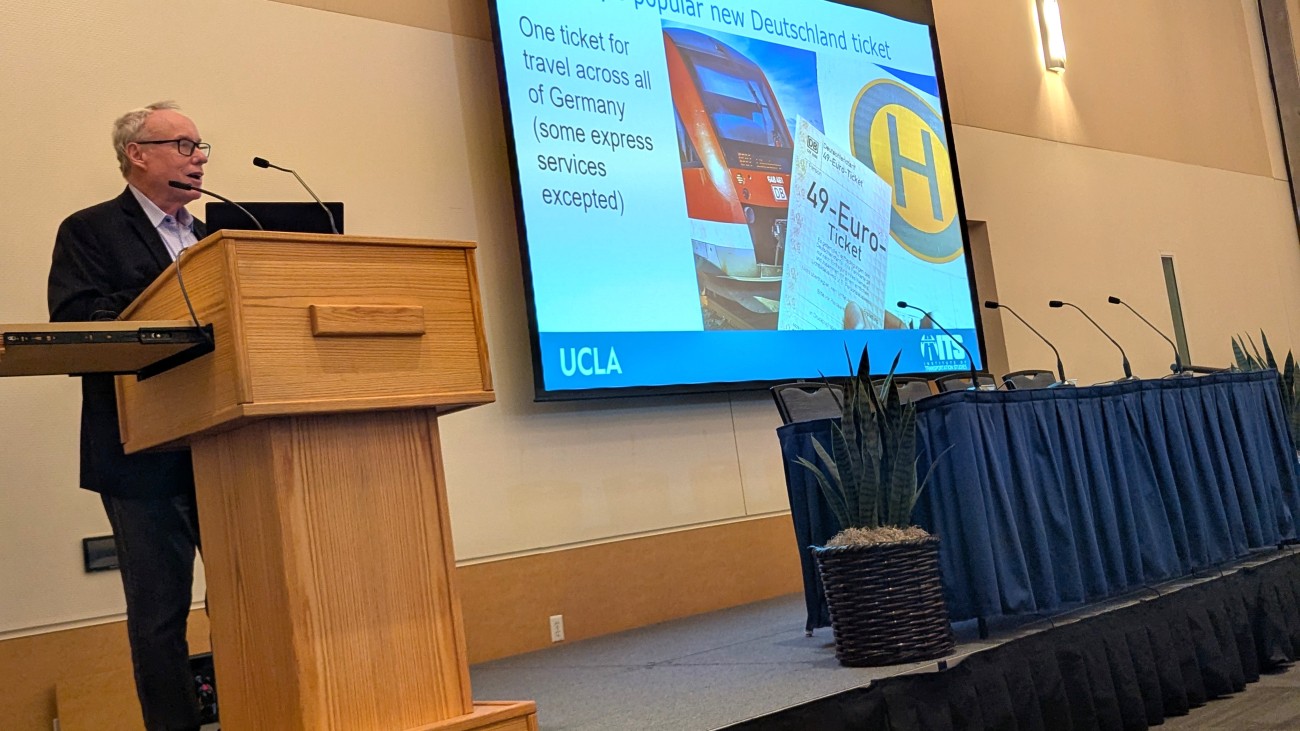
Right Image (from left to right): Director Chang, SFMTA Director Julie Kirschbaum, Juan Matute (UCLA ITS), and UCLA Prof. Brian Taylor
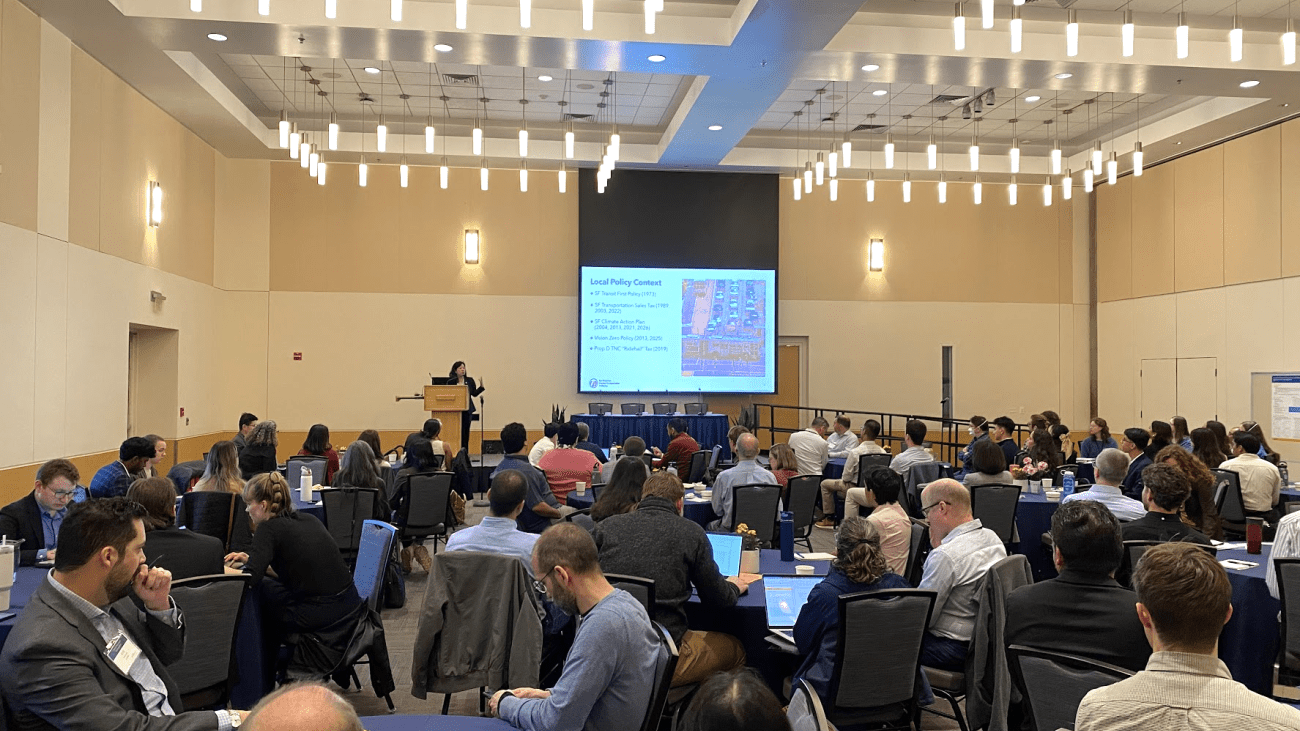
On April 23, the Transportation Authority joined the UC Institute of Transportation Studies, or ITS, for its 5th Annual Transit Research Center Symposium at UC Davis. The annual symposium, led by UC Davis Co-Directors Kari Watkins and Susan Pike, convenes students, researchers, transit agencies, local governments, state agencies, and policy makers with a goal of translating transit research into practice to drive lasting, data-driven solutions.
Symposium Highlights
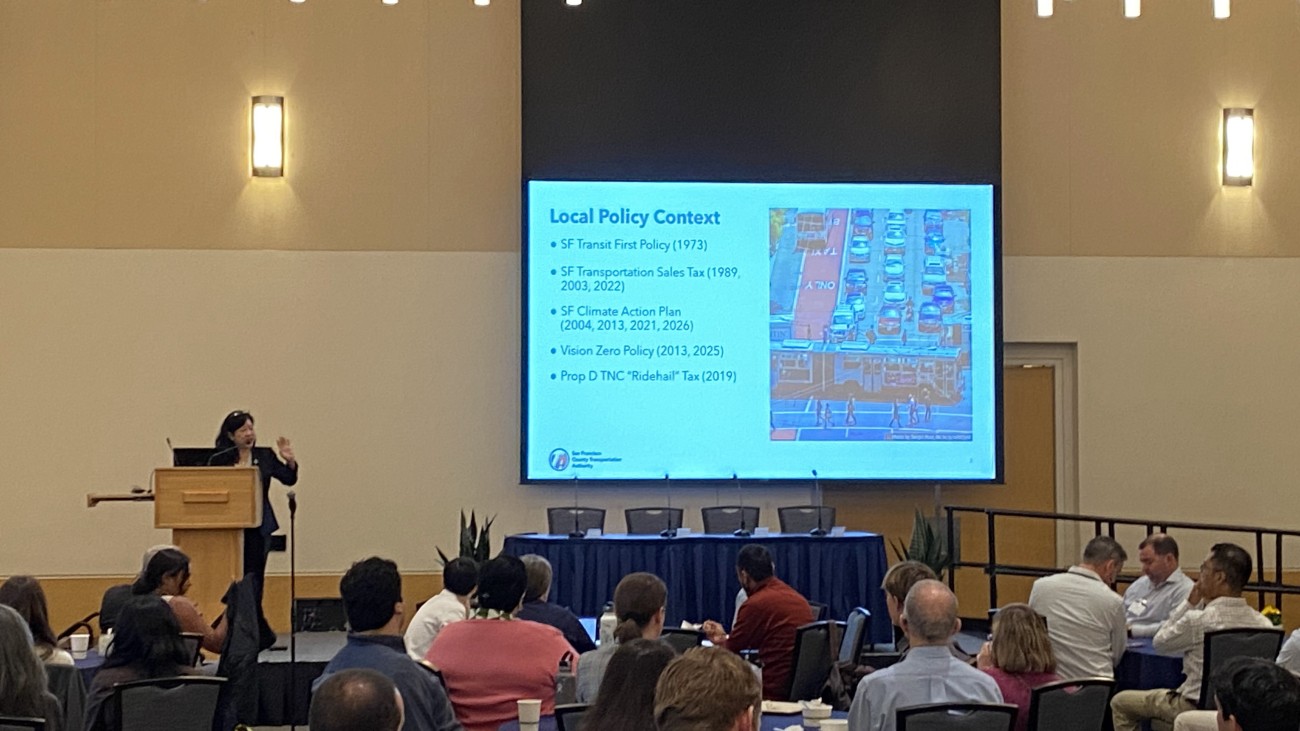
This year, sessions focused on inter-city rail, restoring ridership, and transit innovations. Our Executive Director Tilly Chang delivered the keynote address, in which she advocated for bold action during this critical moment in public transportation for the Bay Area and across California. Some insights Director Chang shared:
- Public transportation is key to achieving many citywide and regional goals, including economic development, congestion management, environmental quality, and equitable access. Transit is a core strategy in San Francisco, anchoring our downtown recovery, supporting regional and local Priority Development Areas and the City’s Climate Action Plan, and underpinning fare affordability initiatives like Free Muni for Youth, seniors and persons with disabilities.
- Collaboration across the region and state is critical to stabilize and strengthen transit through efforts like extension of the state’s Greenhouse Gas Reduction Fund Cap and Invest program and Senate Bill 63 - the Connect Bay Area Act, both of which were signed into law by the Governor last year. Bay Area transit systems would receive transit operating funds over the next 14 years from a regional, five-county transportation funding measure if placed on the ballot and passed by voters in November 2026. In addition, a potential local parcel tax would generate additional funds for Muni if passed by San Francisco voters. Meanwhile, over the past several years, regional transportation agencies, including the Metropolitan Transportation Commission and Bay Area transit operators have focused on reshaping the region’s transit system into a more seamless, efficient and user-friendly network of services through efforts such as wayfinding, integrated fare programs, and transit priority policies included in the Bay Area Transit Transformation Action Plan.
- Transit investment and innovation can help deliver transformative projects, such as full-featured bus rapid transit designs for the Van Ness Improvement Project, value capture programs that helped deliver the Salesforce Transit Center and modernization programs such as the highly successful Caltrain Electrification project. Leveraging these initiatives is The Portal downtown rail extension, which will link future Caltrain and CA High Speed Rail with 9 other Bay Area transit services at Salesforce Transit Center in the heart of downtown San Francisco. Additional models of public-private partnership include Muni’s Potrero Yard project and the multi-modal Treasure Island Transportation Program, featuring electric ferry and on-Island shuttle services, bikeshare, and a future toll and affordability program which will enable transit-oriented growth as development occurs on the Island.
Throughout the day, attendees explored UC ITS's new two-year public transit research initiative, which was funded through a $4.5 million allocation from the State of California to chart a sustainable future for California transit. Symposium sessions included policy and organizational case studies from New York City and Europe, optimization programs to manage clean technology investments, and expanding shared and on-demand services to reach underserved communities. A theme that emerged was the need to protect, prioritize, and empower transit systems to reach new markets, and keep strategies focused on rider needs and customer amenities.
Symposium Gallery