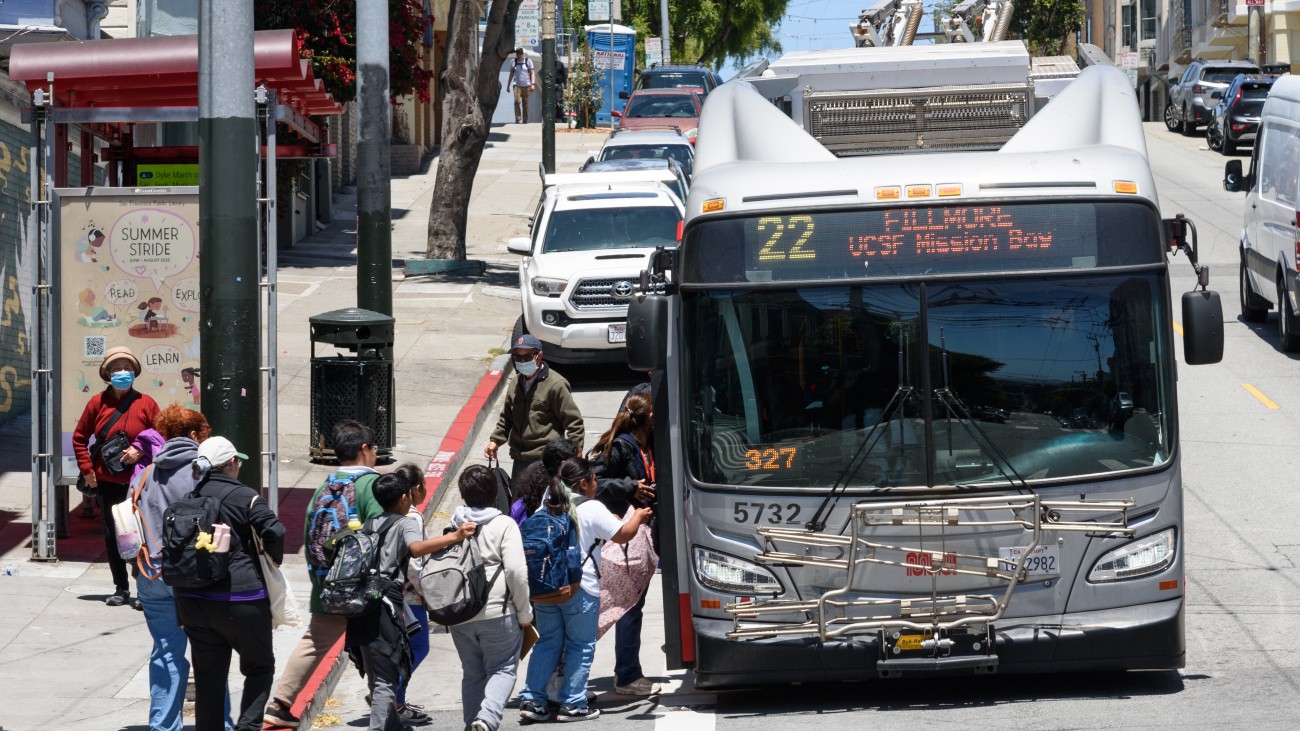
Photo by SFMTA Photography Department
Regional Transportation Measure Update: State Loan Approved
The "Connect Bay Area” regional transportation funding measure is a citizen-led initiative that would support transit operations if placed on the November 2026 ballot and passed by voters in five Bay Area counties. The measure is intended to sustain Bay Area transit services as operators continue towards stabilizing their budgets following the COVID-19 pandemic. The Connect Bay Area measure was authorized by passage of Senate Bill 63, sponsored by Senators Scott Wiener and Jesse Arreguín last year.
The sales tax measure is estimated to generate about $980 million per year for Bay Area transportation agencies serving Alameda, Contra Costa, San Mateo, Santa Clara, and San Francisco counties facing severe operating deficits, also known as the transit fiscal cliff. If passed, tax collection would begin in April 2027 and the first disbursement of funds is anticipated in July 2027. Because transit agencies face pressing operating budget deficits before 2027, they collectively requested a state loan to bridge the time it would take for a successful regional funding measure to take effect, thereby avoiding service cuts.
In February, Governor Newsom announced that the state would provide a $590 million loan to the Metropolitan Transportation Commission to support transit operations for AC Transit, BART, Caltrain, and SFMTA in fiscal year 2027. The loan is secured by operators’ State Transit Assistance revenues and would be paid back by MTC and operators over 12 years with an initial two-year interest-only repayment period. At the February Transportation Authority Board meeting, Chair Melgar – who also serves on the Metropolitan Transportation Commission – expressed gratitude to Governor Newsom, SB 63 authors Senators Wiener and Arreguín, and Bay Area legislators as well as MTC officials, for working together to secure these critical transit operator loan funds.
The Metropolitan Transportation Commission would administer the loan as well as the overall Connect Bay Area funding measure if passed, including:
- Allocating funding to AC Transit, BART, Caltrain, SF Muni, SF Bay Ferry, Golden Gate Transit, SamTrans, VTA, and small East Bay operators
- Directing funding to regional rider-focused improvements guided by the 2021 Transit Transformation Action Plan
- Preparing a ridership forecast for Muni, Caltrain, BART, and AC Transit based on projects and strategies in Plan Bay Area 2050+, to be completed by March 31, 2026
- Conducting a financial efficiency review in two phases, and the second phase to be completed approximately April 2028
- Ongoing oversight as a condition of allocating funds to operators throughout the region
If the citizen-led Connect Bay Area initiative were to qualify, the measure would need to reach a 50%+1 approval threshold to pass in November.
Muni Parcel Tax Update
To help address the transit fiscal cliff, San Francisco officials and SFTMA are proposing a parcel tax intended to prevent Muni service cuts. This parcel tax would complement the sales tax measure authorized under SB 63 and would also be considered by voters at the November 2026 ballot. A parcel tax is a flat- or variable-rate property tax imposed by local governments on property owners.
During the February 24 Transportation Authority Board meeting, SFMTA Director of Transportation Julie Kirschbaum presented an update on the agency’s budget and the development of the proposed parcel tax to help address a projected $307 million per year operating deficit in fiscal year 2027 which grows thereafter. To achieve long-term financial stability and close the Muni deficit, SFMTA is advancing a three-pronged solution consisting of the regional revenue measure, local revenue measure, and agency self-help strategies (efficiencies and increased revenues).
I. Regional Revenue Measure - A state-authorized, five-county sales tax dedicated to transportation that would sunset after 14 years if passed in November 2026.
- Under the potential Connect Bay Area measure, San Francisco would see a one-cent sales tax increase while Alameda, Contra Costa, San Mateo, and Santa Clara counties would see a half-cent sales tax increase.
- If passed by voters, Muni would receive approximately $155 million per year to address the agency’s structural deficit.
II. Local Revenue Measure - A parcel tax that was designed based on input from stakeholders and would sunset after 15 years if passed in November 2026. Under the local measure being developed by a coalition of local proponents, the parcel tax would generate approximately $150 million annually to reduce Muni’s operating deficit and approximately $10 million annually for service improvements. Key parcel tax measure provisions include:
- Owners of single-family homes smaller than 3,000 feet would pay $129 per year. Owners of larger single-family homes, multifamily buildings, commercial properties, and mixed-use buildings would pay varying amounts based on square footage with annual caps of $50,000 for multifamily parcels and $400,000 for non-residential buidlings.
- Owners of housing units subject to rent-control are allowed to pass through up to 50% of the parcel tax to tenants
- Exemptions and deductions include seniors 65 years and older whose home is their primary residence, single room occupancy units, and other properties that are exempt from property taxes
III. Agency Efficiencies & Revenue - Reducing costs, building an efficiency culture and identifying new enterprise revenues in the out years would close the remaining structural deficit. Director Kirschbaum described examples of completed work including personnel savings, improved parking policies and technology upgrades, and transit priority and reliability investments.