Image
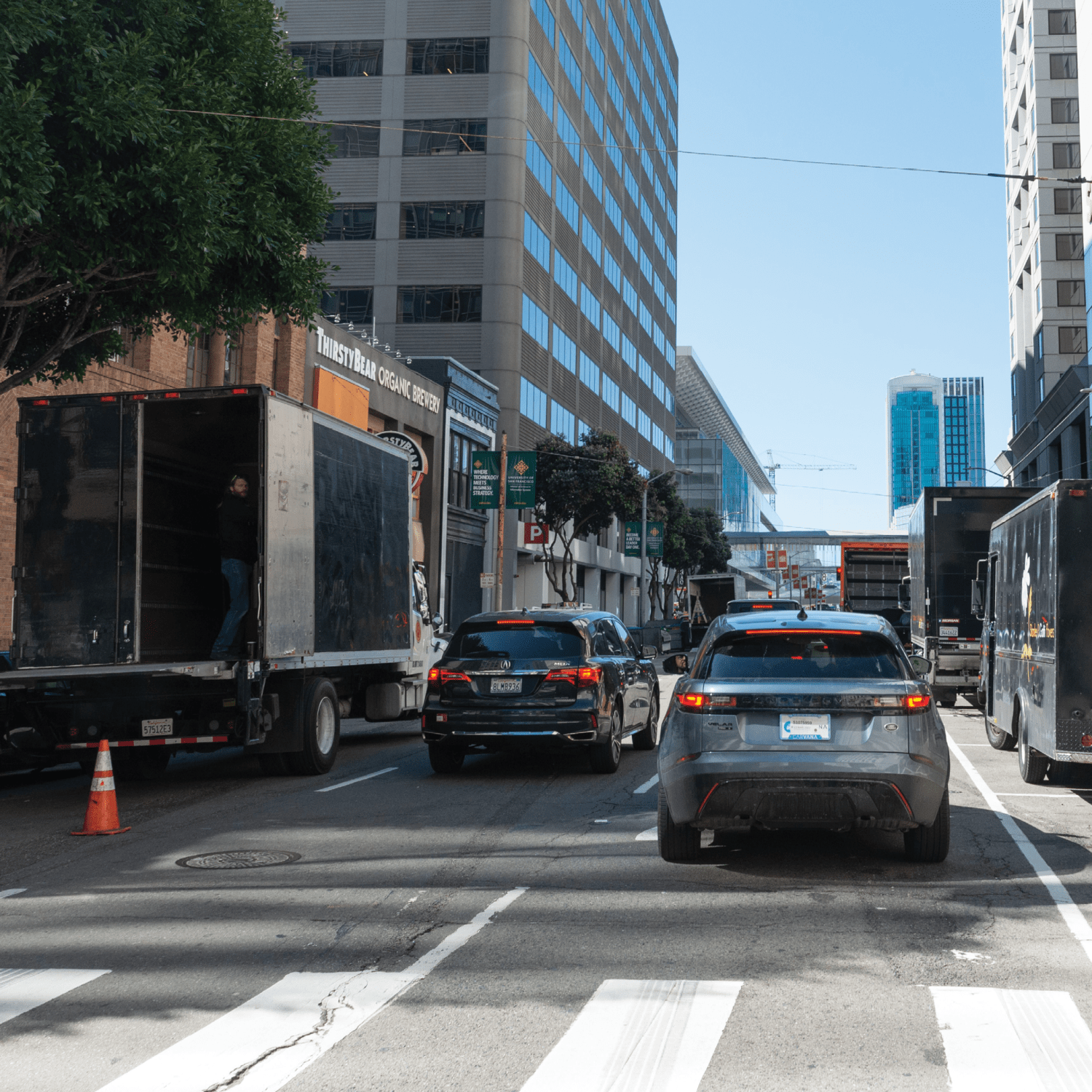

The Eco-Friendly Downtown Deliveries Study brought together a working group of local merchant associations, community benefit districts, delivery companies, and environmental groups to identify and prioritize strategies to promote the use of low- and zero-emission delivery methods in downtown San Francisco. As noted in the San Francisco Climate Action Plan and San Francisco Transportation Plan, the transportation sector is estimated to account for nearly half (46%) of San Francisco’s greenhouse gas emissions. The study was funded by a grant from the Carbon Neutral Cities Alliance and the Transportation Authority’s local Proposition K Transportation Sales Tax program.
The study team and working group developed a framework of shared goals and reviewed low-emission delivery strategies from peer cities, then applied the shared goals framework to understand which strategies might work well in San Francisco. The study found two pilot opportunities have the potential to be effective in reducing emissions in the goods delivery sector:
The Eco-Friendly Downtown Deliveries Study identified recommendations and next steps for each of the potential pilot projects and makes additional recommendations for advancing low- and zero-emission deliveries in San Francisco.
An off-hours delivery program (OHD) seeks to shift delivery to off-peak hours when traffic is less intense and there is less demand for curb space. OHD has shown clear benefits in peer cities, including New York, where deliveries have a significant impact on congestion and traffic circulation. The San Francisco County Transportation Authority (SFCTA) and San Francisco Municipal Transportation Agency (SFMTA) should implement an OHD pilot on known congested commercial corridors (e.g., Chinatown, the Mission, Inner Sunset), including a scoping phase with data collection to determine potential impacts of the program and engagement with merchants to determine incentive levels. The Transportation Authority and SFMTA should also collaborate on a data collection effort to better estimate the benefits of OHD citywide.
A logistics microhub system (microhub for short) is a location where goods are transloaded from larger freight vehicles to smaller electric or human powered vehicles (e.g., cargo cycles, hand carts, or golf carts) for final delivery. Microhubs can also incorporate charging infrastructure, dedicated travel lanes, and vehicle sharing programs to support delivery modes such as e-bikes or e-cargo bikes.
Microhubs could help shift deliveries to sustainable modes and San Francisco should implement a microhub system pilot. As a first step, the Transportation Authority will work with other city agencies to post a Request for Information (RFI) or Request for Expressed Interest (RFEI) to the private sector to better understand interest in and requirements for a potential transloading microhub, and how the city can support commercial e-cargo bike deliveries. Following the RFI/RFEI process, the Transportation Authority and SFMTA should develop a site suitability analysis in partnership with fleet operators that explores locations and facilities in San Francisco best suited to support a microhub pilot and identify up to 5 potential pilot locations. The site suitability analysis should also include engagement with industry partners to explore potential business plan models and features that should be included in a microhub design.
The Transportation Authority led the Eco-Friendly Downtown Deliveries Study in order to explore the potential for San Francisco’s growing goods delivery sector to utilize low- and zero-emission modes of transportation.
The study team brought together a working group of local merchant associations, community benefit districts, delivery companies, and environmental groups to identify and prioritize strategies for low- and zero-emission delivery. The study focused on commercial corridors in the downtown area of San Francisco.
This work builds on the following San Francisco policies and plans which provide guidance about how agencies and policymakers should engage with urban goods movement.
The Eco-Friendly Downtown Business Deliveries Study working group brought together small businesses and community representatives from commercial corridors within Equity Priority Communities (EPCs), which are census tracts that include a diverse cross-section of populations and communities that could be considered disadvantaged or vulnerable now and in the future. In addition to representatives from these areas, the working group included delivery companies and environmental advocacy groups to provide input on delivery needs and operational feasibility.
The working group included a series of five meetings:
In addition to five working group meetings, the Eco-Friendly Downtown Deliveries Study convened a focus group of e-bike delivery workers to consider and provide feedback on a potential e-bike battery swapping locker pilot.
A key contribution of the Eco-Friendly Downtown Deliveries Working Group is a Shared Goals Framework. Staff developed a draft of this framework from existing research and shared it with working group members for discussion during the first working group meeting. Each goal applies to some or all of the stakeholders critical to goods movement in San Francisco.
The project team and working group members applied the Shared Goals Framework to each of the pilot ideas considered through this effort to understand which sustainable goods movement strategies were most likely to advance shared goals and garner the cross-sector collaboration necessary to make strategies work over the long term.
Shared Goals:
The following sections summarize the main findings for each of the three pilots considered by the working group. Findings include the purpose and need of each pilot program to address sustainability issues with goods movement, key strengths and challenges, discussion of recommendations and next steps, and evaluation of the pilot against the shared goals framework.
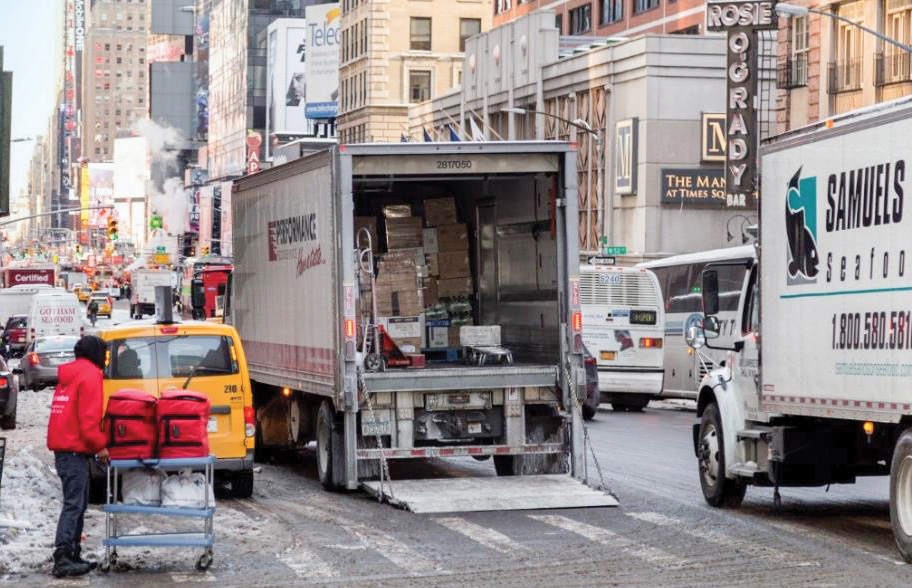
Photo credit: NYC DOT
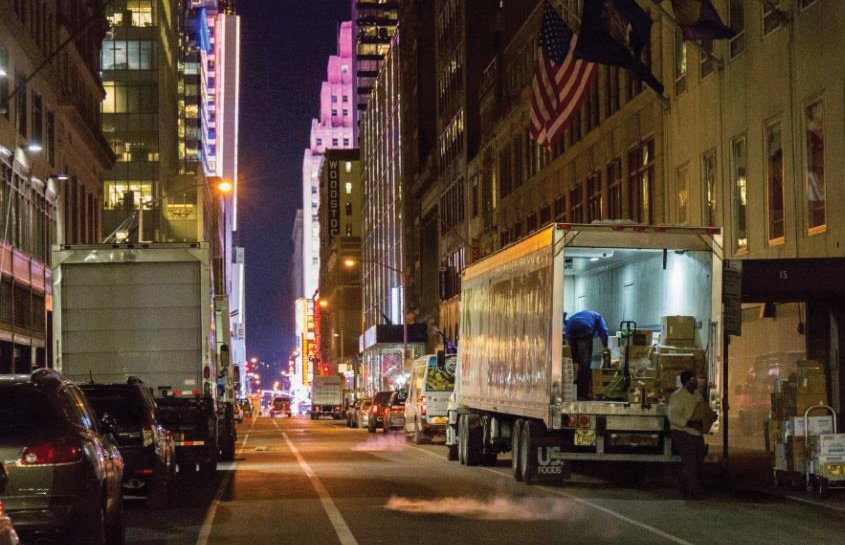
Photo credit: NYC DOT
Trucks making deliveries create congestion, emissions, and safety risks for pedestrians, bicyclists, and others. These challenges are exacerbated when trucks operate during the busiest times of day.
An off-hours delivery program (OHD) seeks to shift delivery to off-peak hours when traffic is less intense and there is less demand for curb space. This can reduce emissions by reducing the amount of time trucks spend circling looking for loading space and can reduce congestion by reducing double parking. OHD programs can shift delivery times several ways, including providing financial incentives to businesses to encourage adoption of OHD, adjusting curb access regulations, or providing technical assistance or OHD training programs.
Examples of OHD in peer cities, such as New York, have found different strengths for carriers, receivers, and the public. For carriers, OHD can lead to more efficient deliveries and truck utilization, as trucks spend more time making deliveries and less time in traffic. Making deliveries during off-peak times also makes it easier for drivers to find parking. Traveling during less congested hours results in fuel savings and reduced costs, as well as potential emissions reduction.
For receivers, OHD can lead to more consistent and predictable delivery times. Having goods delivered outside of store hours can mean that deliveries are ready for businesses when they open, rather than businesses receiving deliveries during the day. This improves staff productivity by reducing business hour interruptions due to deliveries. OHD can also make more sidewalk and curb space available for pedestrians and businesses during busy hours, because space is not taken up by loading or unloading goods.
OHD also has benefits for the general public by reducing conflicts between delivery vehicles and pedestrians and bicyclists during peak hours, and reducing conflicting demand for curb space between delivery and other uses. OHD can also reduce traffic congestion and emissions from delivery trucks.
In the working group, one participant shared that he and other hardware store owners started an OHD program in the 1980s. The program was well received by employees and the truck company because it allowed trucks to get into the city much faster without traffic. Other working group participants felt that shifting deliveries to off-hours or certain days of the week could enable other street changes, such as partial or temporary street closures.
Examples of OHD in peer cities identified key challenges including coordination required between carriers and receivers. Receivers also need staff to work off-hours to receive deliveries or set up a process to facilitate unattended deliveries. OHD can also lead to noise complaints, particularly in residential areas. There may also be stipulations in building lease agreements or zoning regulations that restrict deliveries from occurring only at certain hours.
In San Francisco, businesses may face challenges asking employees to work during late nights or early mornings due to personal safety concerns or lack of public transit service. Working group participants also stated that coordination with the Public Works Department would be needed to ensure that off-hours deliveries do not interfere with street cleaning activities. An OHD program would also require more parking enforcement to reduce overnight parking in loading zones.
OHD has shown clear benefits in peer cities, including New York, where deliveries have a significant impact on congestion and traffic circulation. OHD programs are popular among carriers and receivers and can also lead to greater societal benefits through reducing congestion and emissions. Working group participants generally thought that an OHD program could benefit San Francisco, but thought it was most likely to work for certain business types and felt that the City would need to play a coordinating role between receivers and potentially then support receivers in approaching shippers.
The Transportation Authority and SFMTA should collaborate on a broad data collection effort to understand the number of deliveries happening at peak hours and delivery behavior at peak hours (e.g., loading-zone capacity, circling behavior, double-parking prevalence, impacts on transit) to better estimate the benefits of OHD citywide and where an OHD program would be most beneficial. This should include a full inventory of curb space available for peak hour deliveries in coordination with SFMTA’s ongoing curb digitalization effort, and should be coordinated with initial outreach efforts for SFE’s proposed Fleet Engagement and Technical Assistance program to support small- and medium-sized fleet electrification.
Based on the findings from data collection, SFMTA and the Transportation Authority should determine whether potential changes to loading zones considered in a comprehensive update to the SF Curb Management Strategy are adequate to handle delivery needs, and the congestion and circulation impacts if loading zones are inadequate or used improperly. The data collection effort should identify leading locations to be considered for a future off-hours delivery pilot.
While there is not a good understanding of delivery behavior during peak hours citywide, there are some commercial corridors that are known to experience high levels of congestion at the curb, such as Chinatown, the Mission, and the Inner Sunset. The Transportation Authority and SFMTA should implement an OHD pilot on known congested commercial corridors, including a scoping phase with data collection to determine potential impacts of the program and engagement with merchants to determine incentive levels.
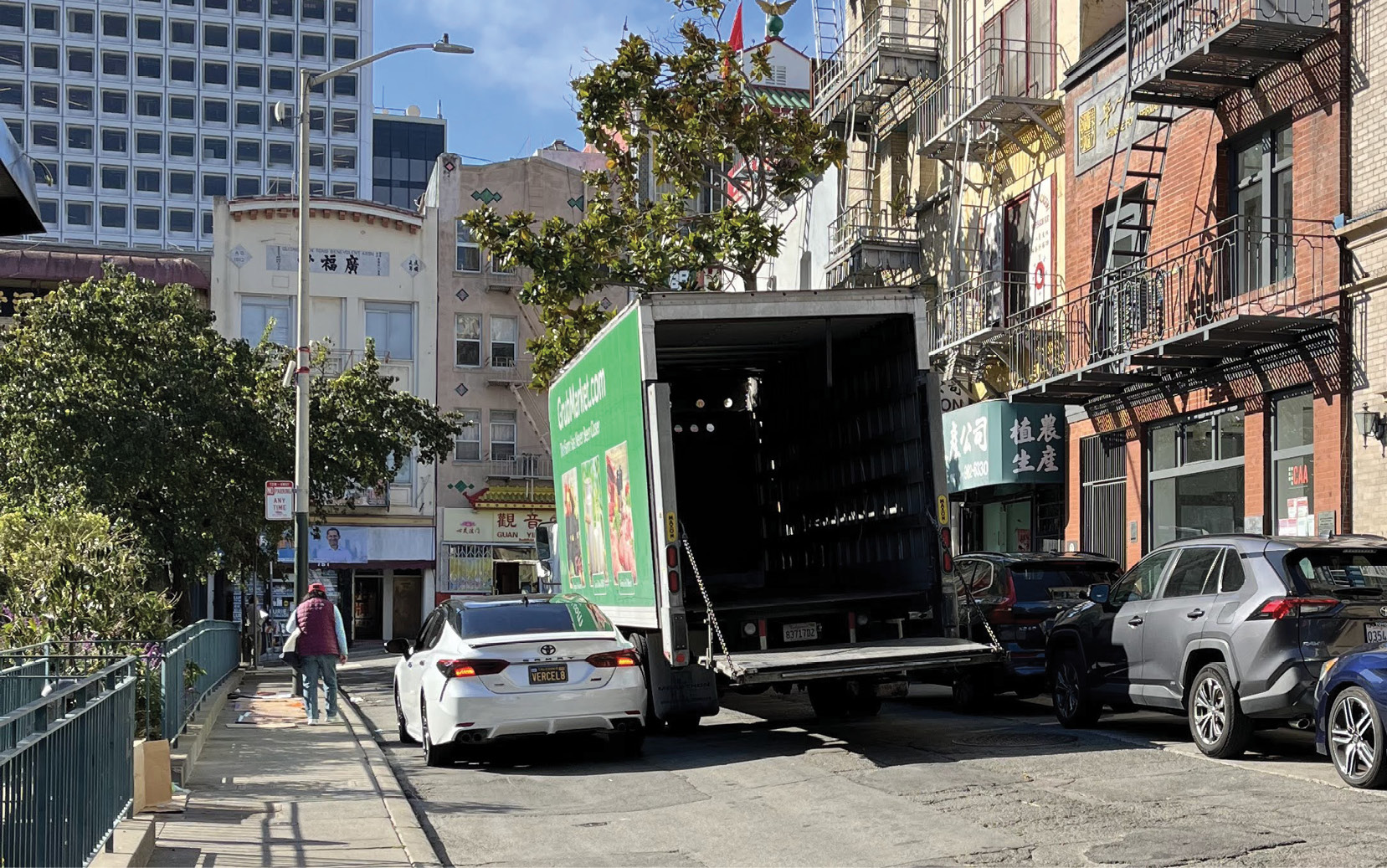
Pilot development should begin with outreach to businesses. Other OHD pilots found that shippers are willing to switch delivery windows if businesses are willing to receive deliveries during those hours. However, there are barriers to OHD for businesses, such as staffing concerns. San Francisco should approach business consortiums either organized around location (e.g., community benefit districts), or business type (e.g., hardware stores) to identify pilot partners, incentive rates, and any infrastructure needed to support unattended deliveries (e.g., storage lockers). Chain stores with non-perishable goods appear to be the most likely to adopt an OHD program.
An off-hours delivery pilot in SF should include elements such as:
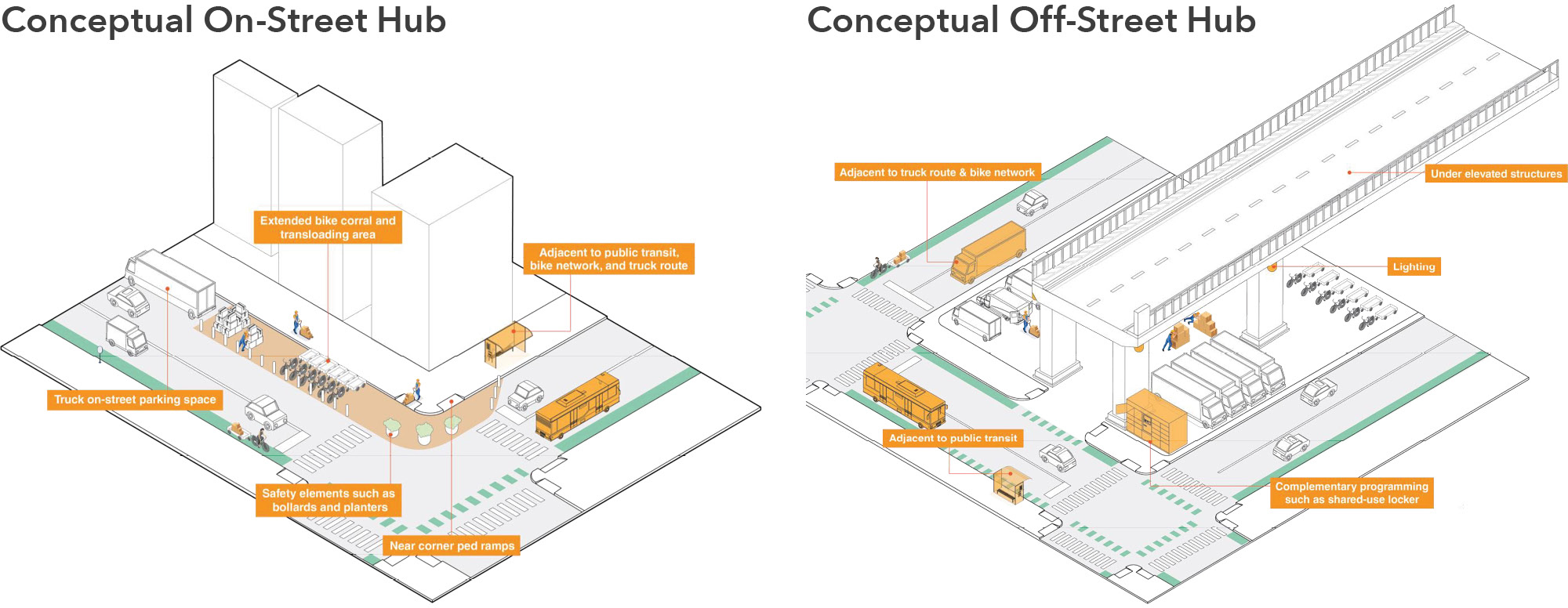
Image credit: NYC DOT
A logistics microhub (microhub for short) is a space located within the public or private right-of-way where goods are transloaded from larger freight vehicles to smaller electric vehicles or human powered modes (e.g., cargo cycles, hand carts, or golf carts) for final delivery.
Current goods distribution methods cause double parking and circling in large, loud, polluting vehicles. This has congestion, safety, and public health impacts. Microhubs could make it easier and more cost-effective to complete deliveries by sustainable modes.
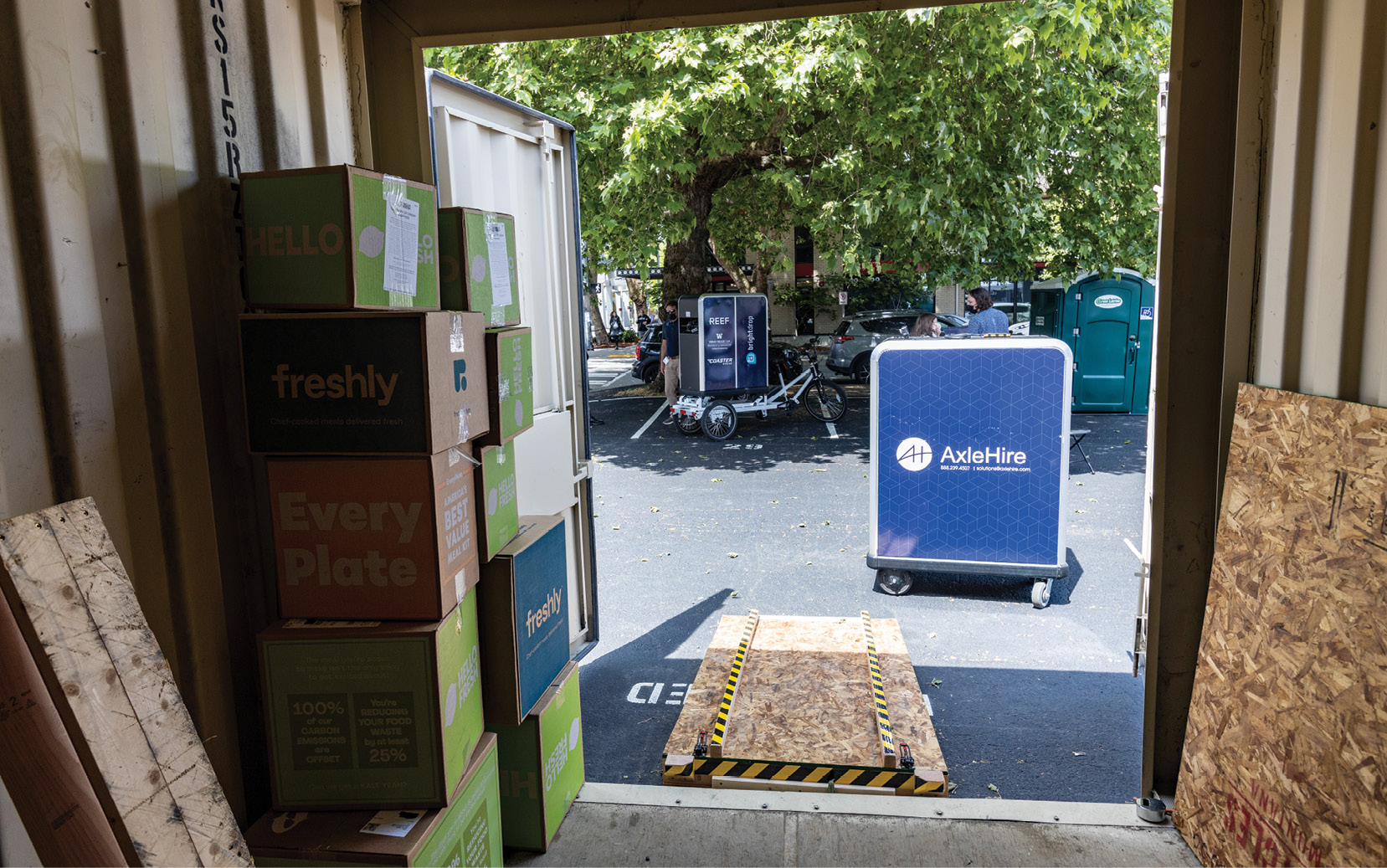
Photo credit: Urban Freight Lab
Microhubs are likely applicable only to some business types, based on the volume and size of packages received. Businesses that receive many large packages or that receive deliveries from larger trucks may find it difficult to shift operations to a microhub. Finding an available and suitable space in the city that could accommodate a microhub is also a challenge. Space in the city is limited and topography could limit the ability of deliveries to be completed by bike.
One potential opportunity to explore is partnering with the state to identify space for microhubs. San Francisco has worked with Caltrans to enable public uses of State Right of Way below or adjacent to freeway parcels, e.g., for skateparks (near Central Freeway), sports courts (near I-280 elevated segment in SoMA) and transit hubs (Salesforce Transit Center).
San Francisco should implement a microhub transloading pilot. As a first step, the Transportation Authority will work with other city agencies to post a Request for Information (RFI) or Request for Expressed Interest (RFEI) to the private sector to better understand interest in and requirements for a potential transloading microhub, and how the city can support commercial e-cargo bike deliveries. Following the RFI/RFEI process, the Transportation Authority and SFMTA should develop a site suitability analysis in partnership with fleet operators that explores locations and facilities in San Francisco best suited to support a microhub pilot and identify up to 5 potential pilot locations and planning level cost estimates to develop microhubs at these locations. The study should consider factors such as proximity to the existing bike network and the location of City-owned real estate such as vacant properties and underutilized off-street parking facilities, coordinating with SF Planning, the Real Estate Division of the City Administrator’s Office, and other City agencies that track and manage City property. The study should engage with industry partners to explore business plan models for each recommended pilot location, which would include a description of roles/responsibilities for operations and financial arrangements as well as optimal site configurations and loading/unloading zones to support efficient access for smaller delivery vehicles, and any other desired features. The study should also engage with local merchants to conduct a market assessment and understand demand for microhubs to support sustainable deliveries for merchants. As part of the site suitability analysis, the study team should identify where infrastructure (e.g., bike lanes, curb cuts, charging infrastructure) can be modified or added to support small last-mile delivery vehicles.
An E-Bike Battery Swapping Locker is an amenity which allows people riding e-bikes to swap empty batteries for fully charged batteries. In urban areas, e-bikes can deliver goods faster than motorized vehicles by using bike lanes and avoiding traffic congestion, parking closer to their destination, and reducing the time spent looking for parking. E-bikes are also a sustainable, zero-emission option for goods delivery.
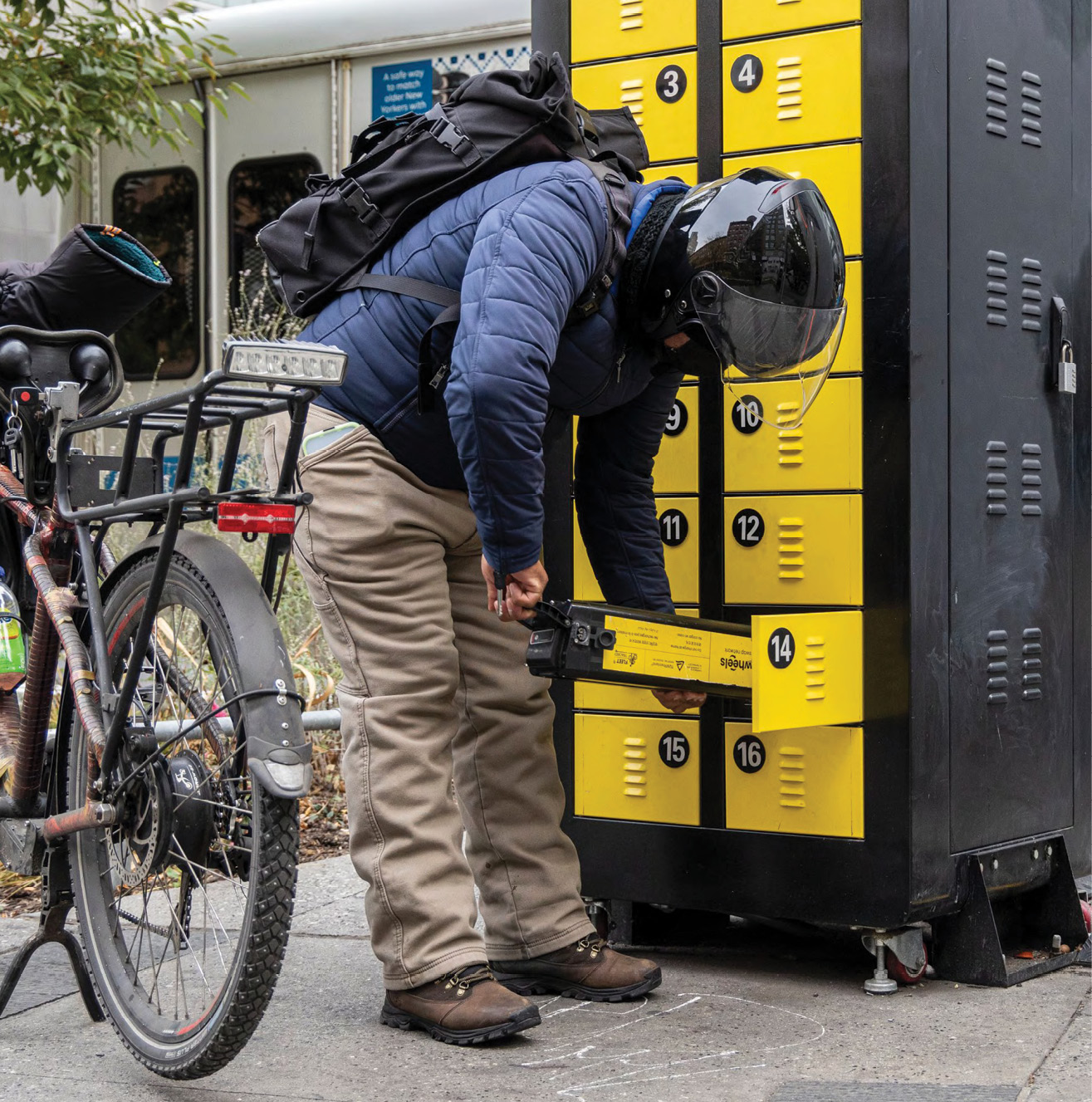
Photo credit: NYC DOT
One downside of e-bikes is that the battery charge is limited, with most e-bike models having batteries that last only 4 – 6 hrs. This poses a challenge for e-bike delivery work as, depending on the type of bike, the bike may not operate after running out of charge. Losing charge can have serious ramifications for e-bike delivery work and workers have set their schedules and work expectations to avoid this happening. Riders will end their workday and stop accepting new orders if they’re low on charge. Functionally, this means they may cut their delivery day short compared to if they had a longer battery life or the opportunity to recharge while delivering.
Swapping batteries at lockers also reduces the risks of structure fires which could be sparked by improper charging or faulty batteries. This is especially important in San Francisco, where the majority of residents live in multi-family housing with limited space for storing and charging e-bikes. As of February 2024, the San Francisco Fire Code restricts charging lithium-ion batteries in multi-family dwellings to one battery per outlet (i.e., no use of power strips) and a maximum of five batteries per dwelling.
Findings from an e-bike battery swapping pilot in New York City indicate that this program would increase delivery worker productivity by allowing workers to complete more deliveries without worrying about running out of charge. Battery swapping also improves fire safety because it reduces the need for delivery workers to charge lithium-ion batteries at home.
E-bike delivery workers shared in a focus group that they were not willing to swap the battery on their e-bike for a different one at battery swapping lockers. Riders see the battery on the bike as “theirs” and are concerned about using a loaner battery because they don’t know the usage history. Riders were also concerned about compatibility and swapping for a battery that fits their bike.
E-bike battery swapping lockers are not recommended for San Francisco at this time due to the lack of interest from e-bike delivery riders who see the battery on the bike as “theirs”. This strategy could be revisited if San Francisco’s e-bike delivery workforce expands, riders converge on a preferred bike/battery type, or a subscription-based or shared delivery fleet model emerges that standardizes equipment across users.
Instead, there was more interest in public e-bike charging infrastructure (e.g., open-air charging plaza). Riders in the focus group were interested in public charging facilities if they had secure places to lock their bikes, were in convenient, accessible locations, and had compatible chargers. Riders said that charging facilities should be located near frequent delivery order generators (e.g., near grocery store, commercial corridors or places with high concentration of restaurants). Riders were willing to pay a one-time fee to use chargers in case of emergency, but less willing to pay a monthly subscription for access to charging facilities. The Climate Action Plan update includes a draft recommendation to pilot e-micromobility storage and charging infrastructure. There is also the potential to co-locate this type of facility with a logistics microhub.
This study found that goods movement in San Francisco happens at many different scales, is extremely varied, and has many important stakeholders. Deliveries are made by large multinational corporations such as Amazon, FedEx, and UPS, by small shipping companies that may only have a single vehicle, and by individuals using their personal cars, bicycles, scooters, or mopeds. Deliveries also happen at different time scales, with food and grocery deliveries being more time sensitive than parcel deliveries. Shippers and receivers can have competing needs and demands.
Meanwhile, goods movement solutions often require active buy-in and coordination between multiple parties. These realities lead us to the conclusion that San Francisco would benefit from more clear leadership and organized response across city agencies. SFE’s recent E-Bike Delivery Pilot and Medium/Heavy-Duty Truck Electrification Blueprint report as well as the draft Climate Action Plan update both call for the City to establish an Urban Freight Team to develop public-private partnerships to research, implement, and test urban freight plans, projects and policies. This conclusion is supported by findings from this study as well.
This study looked at various sources of data on goods movement in San Francisco. In general, data sources are limited and fragmented. The 2023 – 24 Bay Area Household Travel Diary Survey included questions about package deliveries and the Transportation Authority’s Downtown Travel Study found significant growth (over 50% increase compared to pre-pandemic) in delivery trips for households across the city. The 2021 Climate Action Plan used emissions and travel modeling to quantify the greenhouse gas emissions associated with medium- and heavy-duty trucks in San Francisco. In 2018, SF Planning conducted observations of loading zones as part of an update to the loading demand methodology contained within SF Planning’s Transportation Impact Analysis Guidelines for Environmental Review. Observations highlighted the complexity and variance of loading needs across different land uses. In 2019, a team of data analysts built Safe Lanes, an app allowing users to report illegal parking activity in bike lanes. This crowdsourced data suggests that double parking of delivery vehicles in bike lanes creates safety hazards. Finally, a survey of on-demand delivery drivers conducted by the Local Agency Formation Commission (LAFCO) found that delivery drivers have a hard time finding parking and most have received parking tickets. The study also found that workers are interested in shifting trips from their private vehicles to electric bicycles, which would mitigate many of the concerns highlighted in other data sources.
These data suggest growth in the delivery sector but also form an incomplete picture of goods movement in San Francisco. Data gaps still remain to understand how loading zones are used post-COVID, types of loading activities, loading behavior outside of designated loading zones, number and duration of deliveries by geography, mode, and time of day, common delivery routes, collisions as a result of deliveries, fleet composition (including fuel type and personal vs. commercial vehicles), identities of fleet owners/managers and labor groups/associations, and data on residential deliveries and e-commerce. Sound decision-making about how to address issues related to goods movement and loading requires better data about current conditions.
San Francisco should execute a data collection effort which seeks to provide a clear and comprehensive picture of goods movement within San Francisco in order to support sector planning and demand forecasting efforts. The Urban Freight Working Group can provide technical support and guidance to agencies leading the data collection effort. Data collection can also be conducted as part of the microhubs site suitability analysis or the off-hours delivery pilot scoping phase. All pilots should also utilize the Mobility Data Specification and other data exchange standards as appropriate to support monitoring by government agencies and facilitate integration with user application platforms.
Deliveries in San Francisco are made by many different vehicle types and form factors with different needs, everything from medium- and heavy-duty trucks to passenger vehicles to e-bikes and mopeds.
Peer cities are making changes to ensure that city infrastructure can support a wide variety of sustainable vehicle types and form factors. Table 6-1 below summarizes research on infrastructure approaches in peer cities and current approach in San Francisco. This research suggest four ways that San Francisco can build on SFMTA’s ongoing efforts to prepare the city for an expanded e-bike delivery workforce and more diverse delivery fleet:
1.As part of the microhub site suitability analysis recommended in this study, SFMTA and the Transportation Authority should study the bike network near proposed microhub sites to identify places where infrastructure adjustments (e.g., bike lane width, intersection accommodations, curb changes) can be made to better accommodate cargo bikes and other small last-mile delivery vehicles.
2.SFMTA should complete an inventory of small vehicles used for deliveries (e.g., cargo bikes, golf carts, etc.) and identify state, regional, or local regulatory barriers to adoption of these vehicles in San Francisco, and potential impacts to other road users. This includes clarifying what types of vehicles are allowed to use bike lanes in San Francisco as well as the width of bike lanes to facilitate small delivery vehicle use.
3.SFMTA should consider piloting secure bike parking lockers large enough to accommodate cargo bikes and e-bikes near places with high volumes of deliveries (e.g., grocery stores).
4.SFE and SFMTA should complete a technology review, feasibility study, and site analysis for publicly accessible micromobility charging infrastructure options other than battery swapping lockers. This would identify different technological approaches to publicly accessible charging infrastructure required, potential locations, agency responsibilities, and implementation cost.
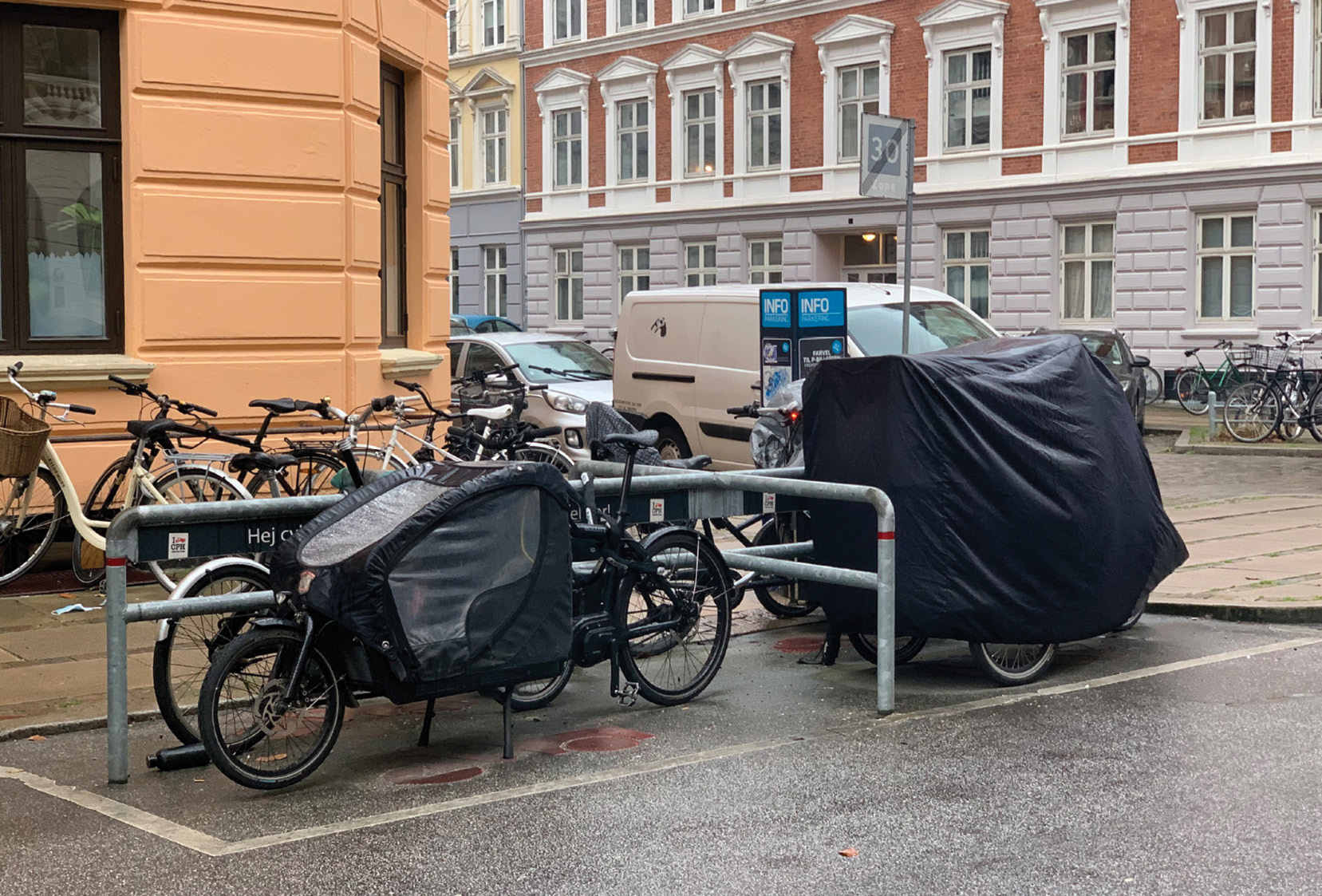
Photo credit: Urban Freight Lab
The table below summarizes the main recommendations of the study, estimated cost, potential funding sources, and suggested lead agency and potential partners.
In 2022, San Francisco voters approved Proposition L (Prop L), the Sales Tax for Transportation, which directs half-cent sales tax funds to a 30-year Expenditure Plan that identifies projects and programs to be funded by the sales tax. The Expenditure Plan describes the types of projects eligible for funds under each of its 28 programs. This project's recommendations, which support projects that have high potential to shift deliveries to more sustainable modes and less congested times of day, may be eligible under the following program:
The TFCA is funded by a $4-per-vehicle registration surcharge in the nine-county Bay Area. The Bay Area Air District administers the program and makes 40% of the revenues available to each county. The Transportation Authority is San Francisco County’s designated TFCA manager and dedicates approximately $700,000 annually to projects that support bicycle, pedestrian, and other transportation projects that help clean the air by reducing motor vehicle emissions. TFCA has funded SFMTA bike parking projects in previous funding cycles and could fund lockers that accommodate e-bikes and cargo bikes.
The One Bay Area Grant (OBAG) Program guides how the Metropolitan Transportation Commission (MTC) distributes federal transportation funding from the Federal Highway Administration to projects and programs that improve safety, spur economic development, and help the Bay Area meet climate change and air quality improvement goals. Federal grants included under OBAG include Surface Transportation Program and Congestion Mitigation and Air Quality Improvement (CMAQ) funds. The latter funded the extension of the off-hours delivery pilot in New York City.
The third round of OBAG funding (OBAG 3) was adopted by MTC in January 2022 and provides federal funding for projects from 2023 to 2026. The OBAG 3 program is divided into a Regional Program comprised of a suite of grant programs managed by MTC, and a County Program, managed by MTC in partnership with the nine Bay Area County Transportation Agencies (CTAs), including the Transportation Authority. Discussions are underway on OBAG 4, with funds expected to be available for projects in 2027 through 2030. While MTC plans to adopt the OBAG 4 framework by the end of 2025 and issue a call for projects for the OBAG4 County program in early 2026, guidelines for the various regional grant programs may not be known for months, if not a year or more later, as their roll out is typically staggered. Based on information currently available, we anticipate the following grant programs (or their successors) as potential fund sources for this study's recommendations:
The U.S. Department of Transportation administers the Strengthening Mobility and Revolutionizing Transportation (SMART) discretionary grant program. The SMART Grant program funds demonstration projects focused on advanced smart community technologies and systems in order to improve transportation efficiency and safety. This program is not currently accepting applications and future cycles are to be determined.
California Senate Bill 1 (SB 1) was signed into law on April 28, 2017. SB 1 provides $5.4 billion annually toward transportation in California, funding a wide variety of transportation projects through many different grant programs. Among those, SB 1 provides approximately $25 million in funds for Sustainable Communities Grants each grant cycle, which are intended to support and implement strategies to achieve the state’s greenhouse gas reduction target of 40 and 80 percent below 1990 levels by 2030 and 2050, respectively.
This study was funded by the CNCA Game Changer Fund. The Game Changer Fund was launched in 2021 and awarded funding over a three-year period to support the development, adoption, and implementation of policies that aggressively shift the fundamental attributes of the systems that have caused the climate crisis toward carbon neutrality. Future RFPs for the Game Changer Fund will be released as funding becomes available.
The Eco-Friendly Downtown Deliveries Study was funded by a grant from the Carbon Neutral Cities Alliance (CNCA) and Proposition K Local Transportation Sales Tax funds. The City and County of San Francisco is a member of the CNCA. The CNCA awards competitive grants to its member agencies to support implementation of Climate Action Plans and other greenhouse gas emissions reduction strategies.

 Download a PDF of this report