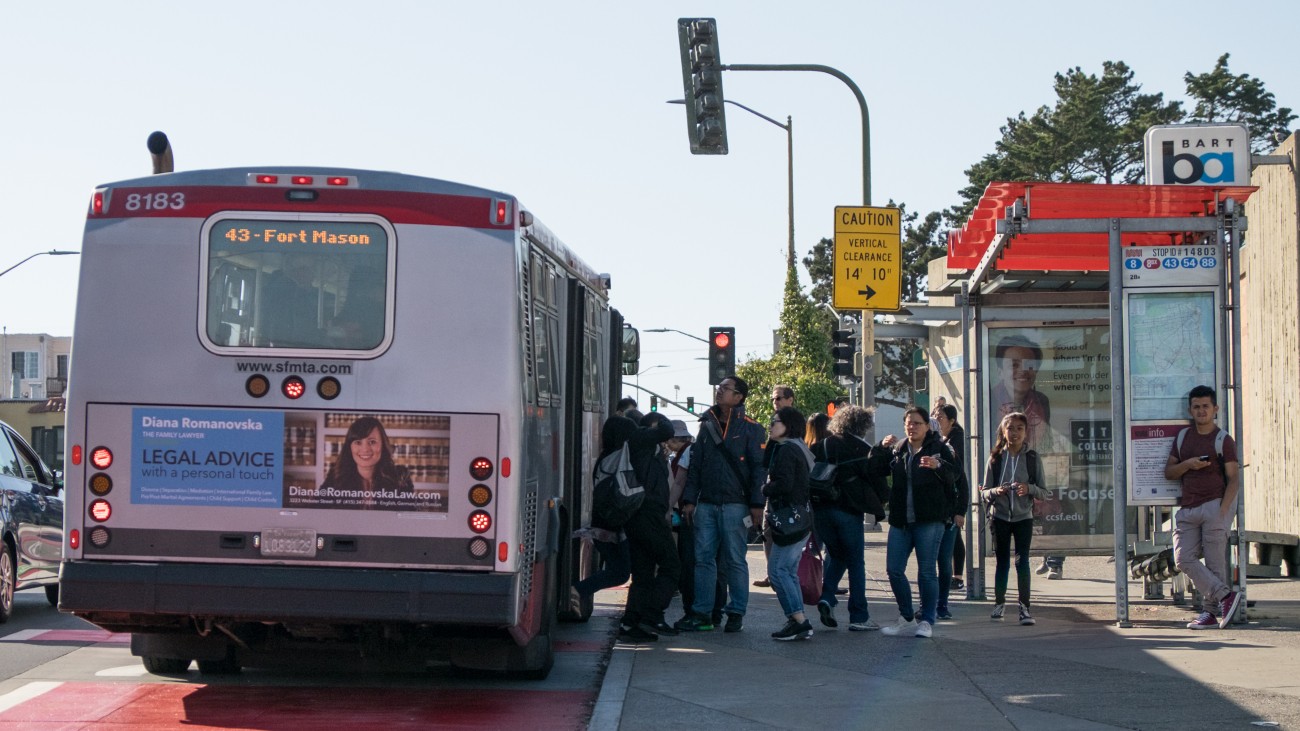
Photo by SFMTA Photography Department
On November 3, 2026, San Francisco and Bay Area voters passed two transit revenue measures–Propositions H and RTM– to sustain transit services and avoid a “fiscal cliff” for regional transit operators which faced significant service cuts in the absence of funding solutions.
“We are grateful to voters for recognizing that Muni, BART, and Caltrain provide vital services for San Francisco and the Bay Area, helping connect us to jobs, schools, businesses, and one another,” said Myrna Melgar, Chair of the Transportation Authority, member of the Metropolitan Transportation Commission which will oversee the implementation of the regional measure, and District 7 Supervisor. “The passage of Propositions H and RTM ensures our major transit operators can sustain their operations and avoid major service cuts for the next 14 years. I also want to thank the broad public, private, and community partnerships that came together to pass these measures, and look forward to our continued collaboration to make transit accessible for all.”
The pressing need for operating funds resulted from pandemic-induced shifts in travel behaviors and declines in farebox, parking, and other types of revenues that have historically supported transit. Once enacted, these measures will provide new revenues to address the more than $800 million in annual funding shortfalls that SFMTA, BART, Caltrain, and AC Transit are collectively facing in the immediate future, helping to sustain transit operations across the region and providing investments in customer-facing improvements. The measures also provide a runway for the agencies to develop sustainable, post-pandemic funding models to support operations before Proposition RTM expires in 2041 and H in 2042.
Proposition H: San Francisco Muni Parcel Tax
While ridership recovery has been stronger for SFMTA than other Bay Area operators, SFMTA still faces an operating deficit of at least $350 million annually driven by lower tax revenues caused by economic downturn and shifts from in-person to remote work. Proposition H will introduce a new annual parcel tax for 15 years, generating about $150 million per year to reduce the deficit and about $10 million per year for service improvements. A citizens’ group will be formed to review spending of Proposition H funds, and the Controller will report each year to the Board of Supervisors on how the funds were used.
Visit SFMTA.com/Parcel for more information on the parcel tax. Information on the potential economic impacts of the parcel tax can be found in the Office of the Controller’s Economic Impact Report (PDF).
Proposition RTM: Regional Transit Sales Tax Measure
Other operators in the Bay Area–including BART, Caltrain, AC Transit, and others–are also facing major deficits due to reduced ridership caused by regional shifts to remote work. Proposition RTM, the "Connect Bay Area” regional transit funding measure, will enact a 1.0% sales tax increase in San Francisco and a 0.5% sales tax increase in Alameda, Contra Costa, San Mateo, and Santa Clara counties. The tax will be collected beginning April 1, 2027, and is estimated to raise about $1 billion per year across the region for transit operations and customer experience improvements for the next 14 years.
SFMTA will receive about $155 million for transit operations from RTM, while BART, Caltrain and AC Transit are slated to receive $310 million, $70 million, and $50 million per year, respectively. Some revenue would also flow to smaller agencies serving San Francisco such as SF Bay Ferry and Golden Gate Transit to support operations. About $45 million per year will fund rider-focused initiatives across the Bay Area, such as discounts for riders making transfers between transit systems, an expanded Clipper START low-income fare discount, regional transit maps and signage, paratransit programs, and transit priority infrastructure.
An independent oversight committee will be established to ensure funding from the measure is spent responsibly. SFMTA, BART, Caltrain, and AC Transit will also participate in a rigorous financial efficiency review process led by the Metropolitan Transportation Commission to identify strategies the operators can undertake to further reduce costs and improve service offerings with available resources. This process will build on preliminary financial efficiency review work conducted earlier this year, which found that the four operators have already achieved approximately $1 billion in operating cost savings since fiscal year 2020 and identified early-action strategies operators can use to become even more efficient.
More information on Proposition RTM can be found here.
What’s Next
Election results must be certified by county elections officials by December 3, 2026. Parcel taxes imposed under Proposition H will appear on property owners’ fiscal year 2027-28 tax bills and changes to the sales tax rate in San Francisco as required under Proposition RTM will be effective April 1, 2027.