Photo: Sergio Ruiz, flickr
Introduction
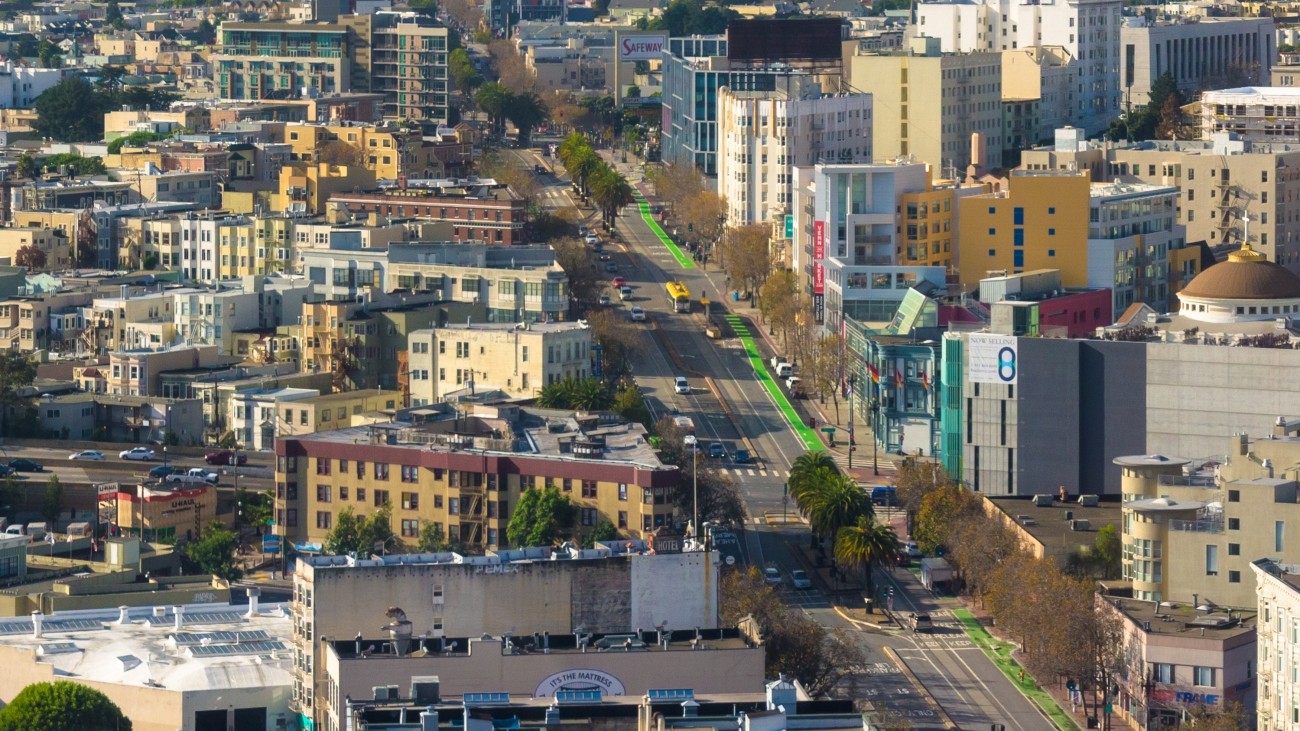
Upper Market Street is a busy corridor between the Lower Haight, Mission, Castro, and Hayes Valley neighborhoods. A one-mile segment of Market Street from Octavia Boulevard and the Central Freeway Ramp to Castro Street and 17th Street, Upper Market has complex, 6-way intersections and is on San Francisco’s Vision Zero High-Injury Network.
Through the Upper Market Street Safety Project, SFMTA installed sidewalk and roadway improvements to make Upper Market safer and more comfortable for people walking, biking, driving, and accessing transit. Improvements included sidewalk extensions, signal upgrades, bikeway upgrades, accessible ramps, pathways, and transit platforms, and streetscape enhancements. These improvements were identified over the previous three years through a collaboration between SFMTA, SF Public Works, and community stakeholders.
Project/Study Partners
This project is funded by the Transportation Authority’s Neighborhood Program and led by the SFMTA.
Cost and Funding
The Transportation Authority's Neighborhood Program partially funded the Upper Market Street Safety Project, including construction of ADA curb ramp improvements near Castro Street and Pink Triangle Park and signal modifications to the intersection of Castro and Market, with $500,000 in Prop K sales tax funds. This project was requested by Transportation Authority Board Member Rafael Mandelman (District 8).
Project Timeline
-
April 2014 – June 2017
Planning/ Conceptual Engineering
-
January 2016 – December 2019
Environmental Studies
-
April 2017 – September 2020
Design Engineering
-
July 2020 – September 2020
Advertise Construction
-
January – March 2021
Start Construction
-
October – December 2022
Open for Use
Resources
SFMTA Upper Market Street Project
Market Octavia Area Plan
Upper Market Street 2009 Community Vision and Recommendations
Upper Market Street Safety Improvements Prop K funding request (PDF)
Contact
Casey Hildreth, SFMTA: casey.hildreth@sfmta.com
Related programs